




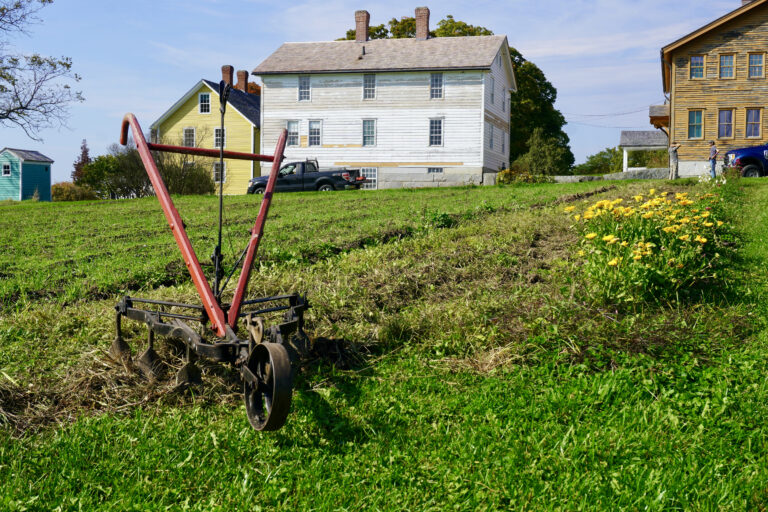
In 2026, change was coming to the vegetable gardens at Canterbury Shaker Village.
At the end of 2025, Turning Mill Farm announced it would cease operations at the Village. Farmer Andrew Messenger had overseen production for the previous three years and had worked the land in different roles since 2018, building a loyal clientele who appreciated his low-till farming techniques and quality produce. With growing season starting in March, it wasn’t a given the Village would be able to fill such an important role in such a short amount of time before seeds needed to be in the ground.
Then in stepped Sanborn Mills Farm.
A community neighbor no more than 20 minutes down the road from the Village, Sanborn Mills Farm is a working educational farm dedicated to teaching traditional skills in farming and craftsmanship that can be applied to people’s daily lives. With shared values of stewardship and education, the Village’s Executive Director Erin Hammerstedt and Sanborn Mills Farm’s Executive Director Michael Molla saw an opportunity to both continue the vegetables garden’s production on land traditionally farmed by the Canterbury Shakers at points across the community’s 200-year history, as well as, provide chances to demonstrate farming techniques and equipment that date to the early 20th-century. The commitment was made on a pilot partnership for the year and work began in April on activating the winterized fields and greenhouses at the Village. It was a month or so into the season, with minimal planning, and all the work felt like it should have been done yesterday to try and keep on track with Mother Nature’s seasonal schedule.
But the gardens would have seed in the ground and there was the chance for new life and opportunity to spring forth from the garden, not only of green produce, but of new visitor experiences and community partnerships. Farming is not an easy field to play catch-up in and Executive Director Hammerstedt was impressed at how Sanborn Mills Farm engaged the challenge. “We were thrilled with how the team from Sanborn Mills Farm jumped right in and started growing,” said Hammerstedt.
The farming operation at the Village this season has been overseen by Sanborn Mills Farms’ Farm Manager Ray Ramsey and Market Gardener Laura Dahl. Ramsey was raised on a 180-acre farm in Indiana and he’s been immersed in the “daily rhythms of farm life,” since his earliest years. His work at the Farm has been centered around engaging and improving upon their active farming programming, which includes the use of draft animals and period-specific equipment. “Whether its’s restoring, collecting, or simply learning the history behind old equipment, preserving agriculture heritage remains one of my greatest passions,” said Ramsey, over a recent email exchange.
Dahl has been working in different styles of gardens since her teens. From wholesale production to ornamental flowers, she’s woven together a lot of agricultural experiences that has guided and inspired her throughout decades of stewarding gardens, and she was excited at the chance to grow vegetables with the Farm. “All of it is fun for me, and challenging, and I’ve always done it at home too. Working with Sanborn Mills Farm is the whole reason I’ve been able to [get into vegetable production], said Dahl, while she tended to the gardens on a recent October morning. The team would be stretched to include the Village in their weekly agricultural operations, which meant additional driving and logistical coordination, as well as the hurdle of activating grow space late in the season. However, with the extra land and greenhouses in their rotation they could increase production of staples like lettuce and yellow beans and experiment with different crops.
Dahl has been the one to run the day-to-day management of the garden and greenhouses. She was mindful and reverent to community members’ connection to the nourishment the gardens have provided over the years, and the way in which the land has been cared for by previous farmers. “I had heard how wonderful it had been over the last few years and how it had been taken care of. The biggest challenge was ensuring I did a good job in the same way people in the past had,” said Dahl.
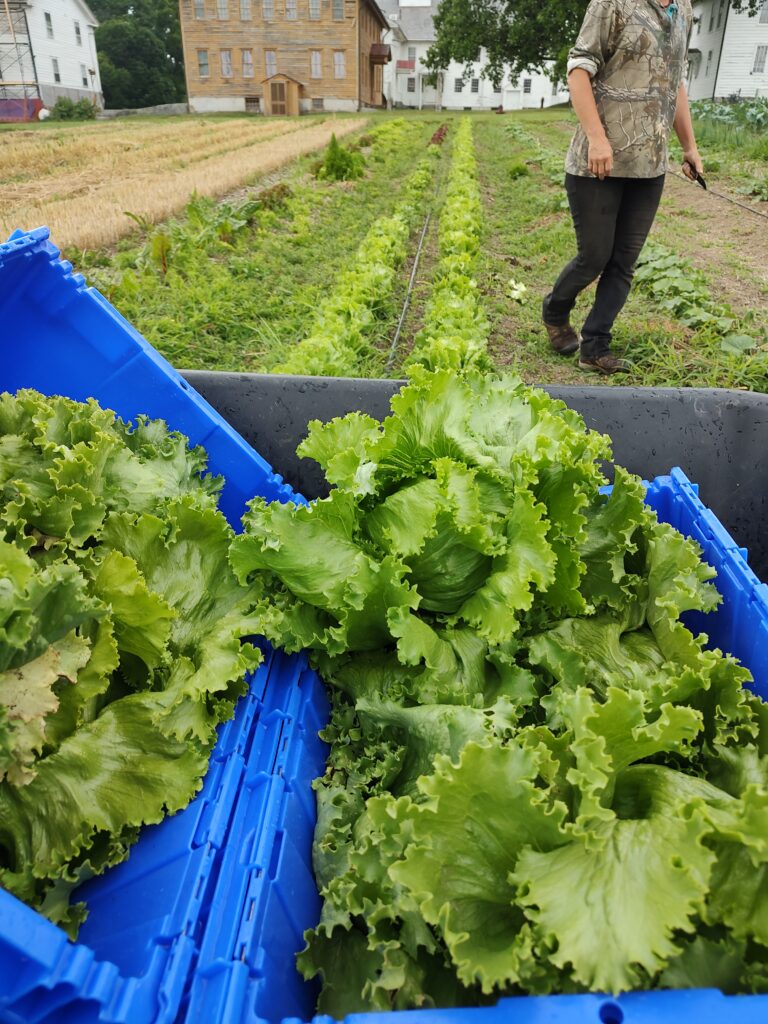
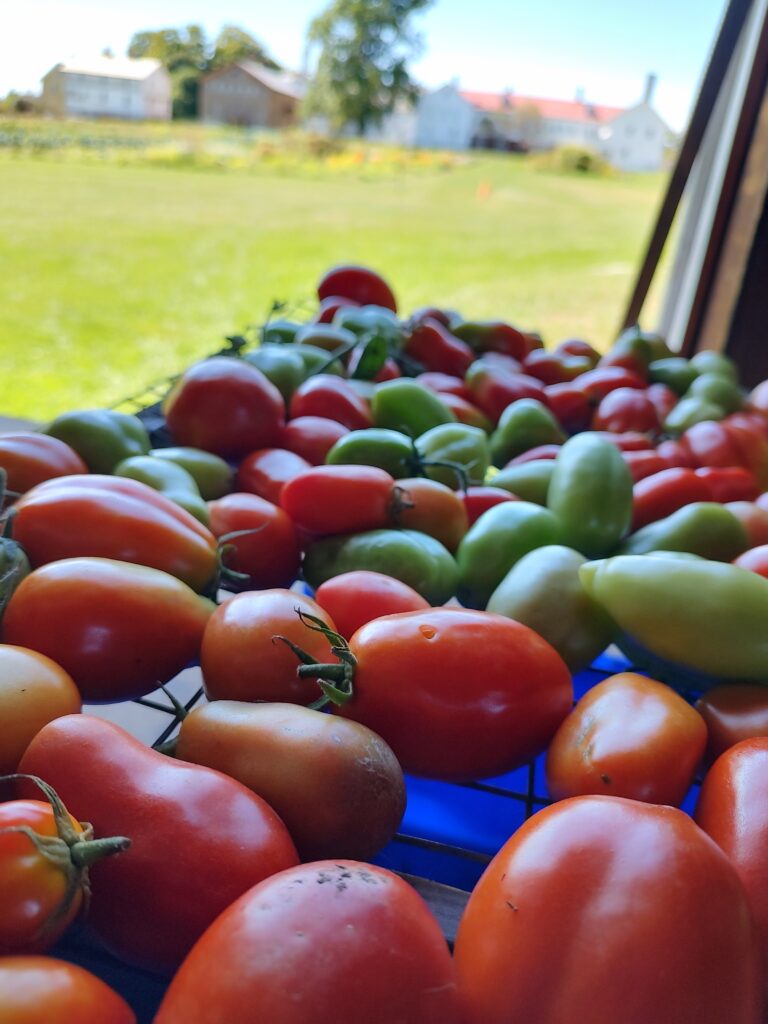
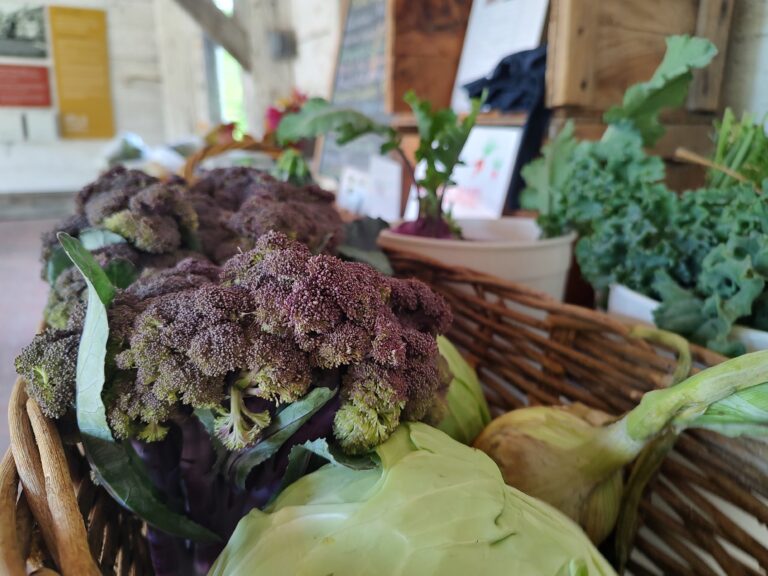
Dahl grew kitchen staples like onions, carrots, and tomatoes, along with smatterings of other common garden favorites like beans and cabbage, and even ornamental flowers. She grew for regional clients, the Farm’s own use in its food service operation, and to sell at the Village itself in a farmstand right at the museum entrance, which had to be restocked every week to accommodate responsive clients. Dahl enthusiastically recounts a short list of production totals from the year, that includes “200 pounds of carrots from one row,” “around 150 pounds” of yellow beans, and at least “108 pounds of lettuce.” She was even able to get “about 40 beautiful pumpkins” on a last-minute decision when some growing space opened.
The mercurial nature of stewarding a garden is one Dahl knows all too well, and knows “you have to be very patient” when it comes to dealing with the swings of good days and bad days in the garden. “It’ll look good at first, then it will completely go downhill or it doesn’t seem like its growing right, “ said Dahl. “Some of the bad days are weather. Or, you weeded two weeks ago and your beds looked gorgeous, now you are back to where you were.” But the good days outweigh the bad and working at the Village provides its own unique opportunity to engage with the people who eat the produce she’s put so much effort into growing.
“The best part is having them be able to walk in the Village and look around. I’ve had so many conversations, about what’s being grown over here, then we talk about it and the varieties they are growing at home, we exchange advice, its been the best part. They love hearing this food is going to other places. They’re excited about the fact they can see it growing and will be bringing it home, ” said Dahl.
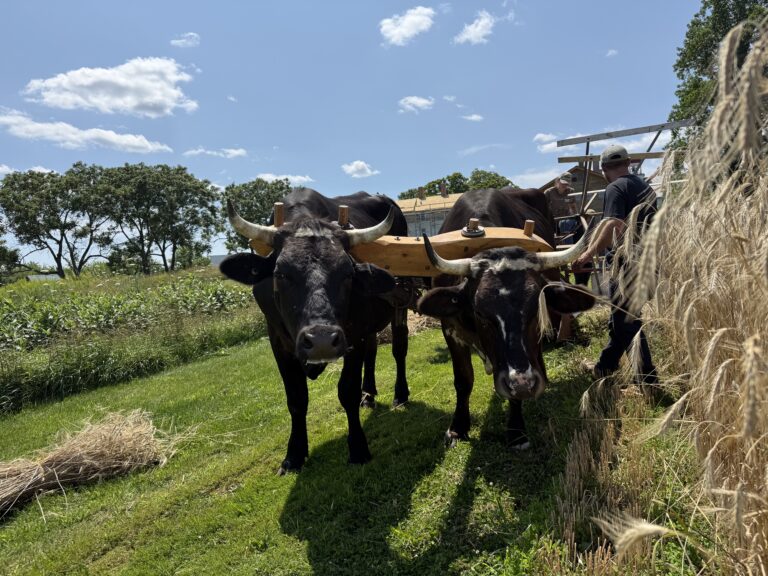
Ramsey was also excited about the opportunities that arose this year to share draft animal demonstrations with visitors at the Village, to educate and reconnect people to the role animals had in our agricultural practices. “Many people today are disconnected from agriculture and the animals that have long been an essential part of it. Demonstrations provide an opportunity to bridge that gap by giving people a chance to experience theses animals first hand,” said Ramsey.
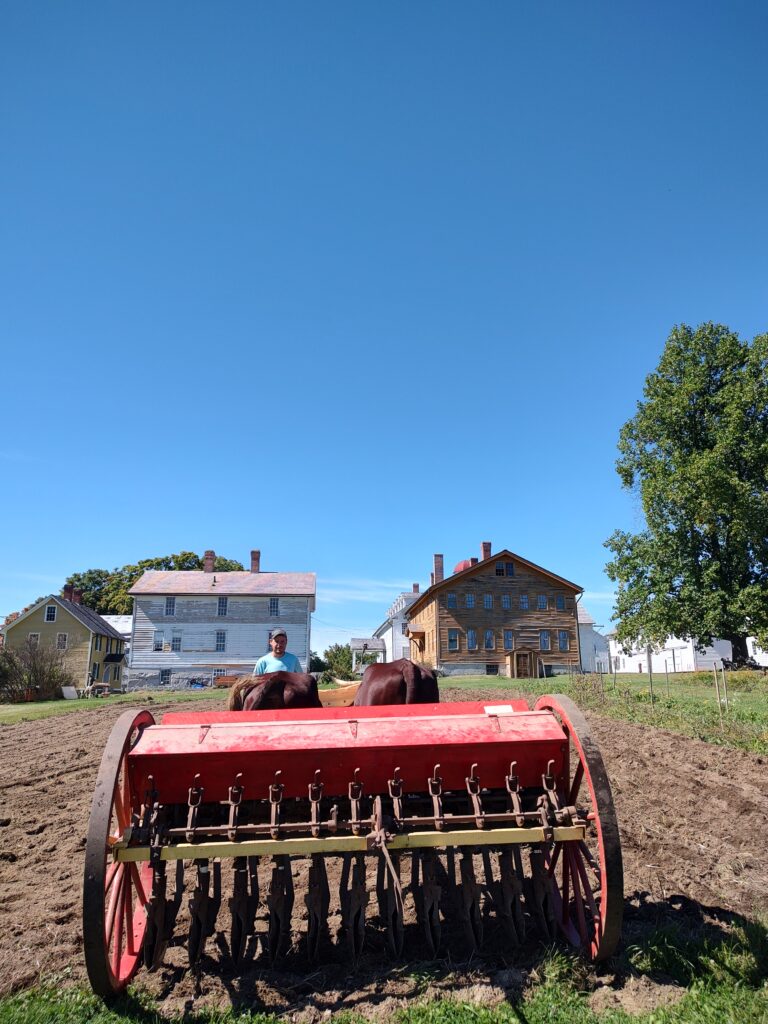
At different points throughout the season, Ramsey and oxen teamster Tyler Allen would cart teams of hulking oxen to the Village and have them work the land with a variety of different agricultural equipment specific to the day’s task. With deft knowledge of hand signals and pithy oral commands and clicks (sometimes responded to with a chorus of reluctant grunts from the oxen), they did rounds of tilling the ground for weeds and production, cutting and binding wheat, and laying in clover and wheat for winterization of a garden section. Ramsey is undertaking work that needs to be done to maintain the integrity of the gardens, and is pleased this work can be seen with new eyes by anyone walking through the Village. “Whether it’s simply touching an oxen for the first time or learning about the important role draft animals played in cultivating fields and working gardens, these experiences help connect people to our agricultural heritage in a meaningful and memorable way,” said Ramsey.
At the Village’s reopening of the Bee House as a new exhibition on Shaker agriculture in August, the vision of combining Village’s historic stewardship with Sanborn Mills Farm’s agricultural education and practice came into its clearest focus. Out in the fields, Ramsey and his team commanded the oxen around the fields using equipment and practices that would have been familiar to farmers in the early 20th century, selling produce grown in those very fields. It offers a glimpse at how these two organizations can continue to work together moving forward.
For his part, Ramsey is encouraged by the year’s initial growth. “Canterbury Shaker Village offers a rich historical and museum perspective, while Sanborn Mills Farm brings the knowledge and energy of a working, educational farm Together, these organizations create a unique opportunity to connect history with living practice,” said Ramsey. “By incorporating meaningful agricultural work into the museum setting, visitors can experience a more complete and authentic representation of the past, seeing not only how people lived, but also how they worked, farmed and interacted with the land.”
Hammerstedt shares his enthusiasm and is inspired by the possibilities that are out there as the two organizations look for ways to grow together. “They provided a positive contribution to the daily activity on site, demonstrating traditional ways of engaging with the land to produce food,” said Hammerstedt. “Our visitors loved seeing the team – oxen and humans – on site and appreciated the opportunity to purchase produce grown right here. Their work adds tremendous value to the Village, and we look forward to partnering with them again next season.”