




Each year in May we celebrate National Historic Preservation Month to highlight the importance of protecting historic places. Established in 1973 by the National Trust for Historic Preservation, the intention of preservation month is to showcase the social and economic benefits of historic preservation, spreading the word that preserving historic places supports community identity and economic stability.
Social Benefits of Historic Preservation
Historic buildings are a physical reflection of our lives, providing an important visible and tangible connection to our past. Historic places are, essentially, the illustrations within the stories of the humans who built, lived, or worked in them. History – and particularly the historic places that illustrate it – provides context, meaning, and perspective in our lives. Historic places provide opportunities for us to consider and reflect on human behavior and how our decisions shape the world we live in.
My former boss often said, “It’s not good because it’s old, it’s old because it’s good.” Old buildings are not important simply because they continue to exist. Instead, they have survived, being used and cared for, because they have value. They are of quality and/or have meaning and/or utility, and that makes them worth continuing to use and care for.
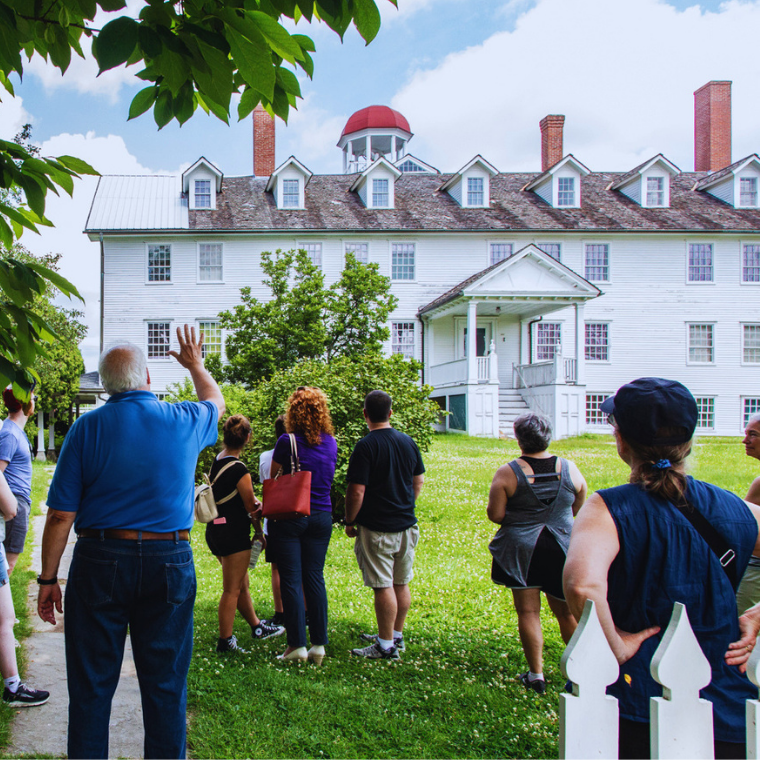
At Canterbury Shaker Village, we invite and encourage people to spend time at this National Historic Landmark, exploring trails along the man-made waterways that powered the Shaker industries, enjoying the gardens and village landscape, touring historic buildings, and looking at Shaker artifacts. Connecting with the place and its people (past and present) promotes learning, reflection, and rejuvenation.
Economic Benefits of Historic Preservation
Of the many documented economic benefits of historic preservation, at Canterbury Shaker Village we are most directly linked to heritage tourism and jobs. Tourism is a key driver to the New Hampshire economy, employing more than 70,000 people. About 25 people work at Canterbury Shaker Village, and many more in hospitality (hotels, restaurants) benefit from visitors to the Village.
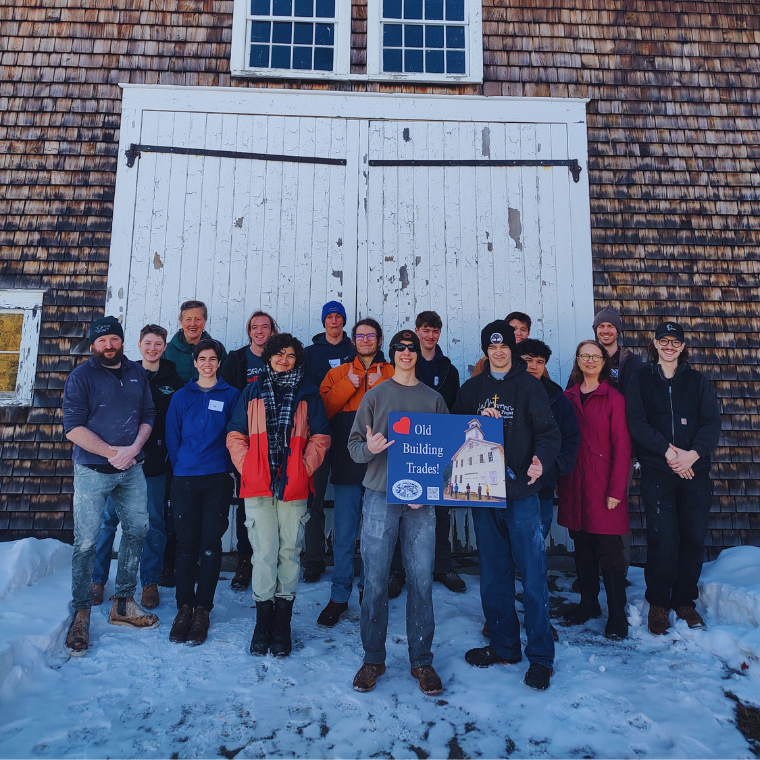
Additionally, people working in the building trades are required to preserve and operate the 700-acre museum. In many places, including New Hampshire, there is a shortage of people working in the traditional building trades. Canterbury Shaker Village is working activity with partners such as the New Hampshire Preservation Alliance and Preservation Timber Framing to encourage a new generation of people to work in the traditional trades. We have hosted several weeks of Career Exploration in the Old Building Trades, where students have had an opportunity to learn about and try their hand at several different trades, from timber framing to window restoration, masonry to plastering, and roofing to electrical.
As an outgrowth of this program, we will be launching an internship program in the preservation trades, hiring students from high-quality training programs to work alongside contractors on real projects in the Village.
Historic Preservation Projects This Season
Canterbury Shaker Village was home to a community of Shakers for 200 years from 1792 to 1992. Operating as a museum where Shaker values and concepts inspire people to live more meaningful lives, the nonprofit Canterbury Shaker Village, Inc. continues to care for this special place that demonstrates both exceptional quality in design, materials, and craftsmanship, and national significance as a reflection of the Shaker religion and communal lifestyle.
We hope that you come visit Canterbury Shaker Village this season to experience historic preservation in action! Five of our historic buildings will be under construction this summer:
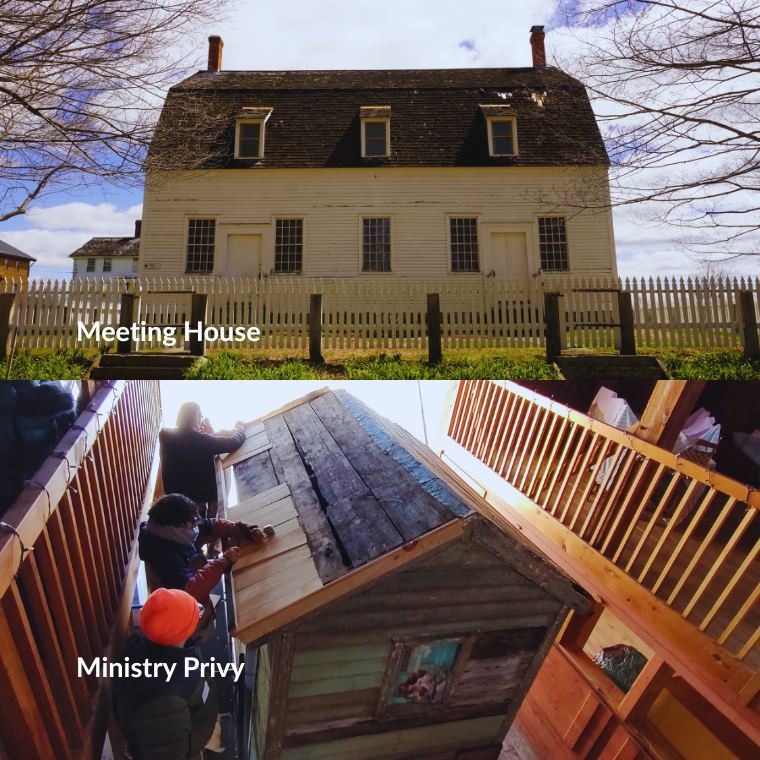
Ministry Privy (before 1850): Preservation is underway as part of the New Hampshire Preservation Alliance’s Career Exploration in the Old Building Trades program. The preserved outhouse will be returned to its stone foundation in May or June.
The Church Family Meeting House (1792): Will receive structural repairs and exterior preservation, with a preservation trades internship program, beginning in May. The building will be jacked up for sill repairs, receive a new cedar roof, have its windows restored, have other carpentry repairs, and be repainted.
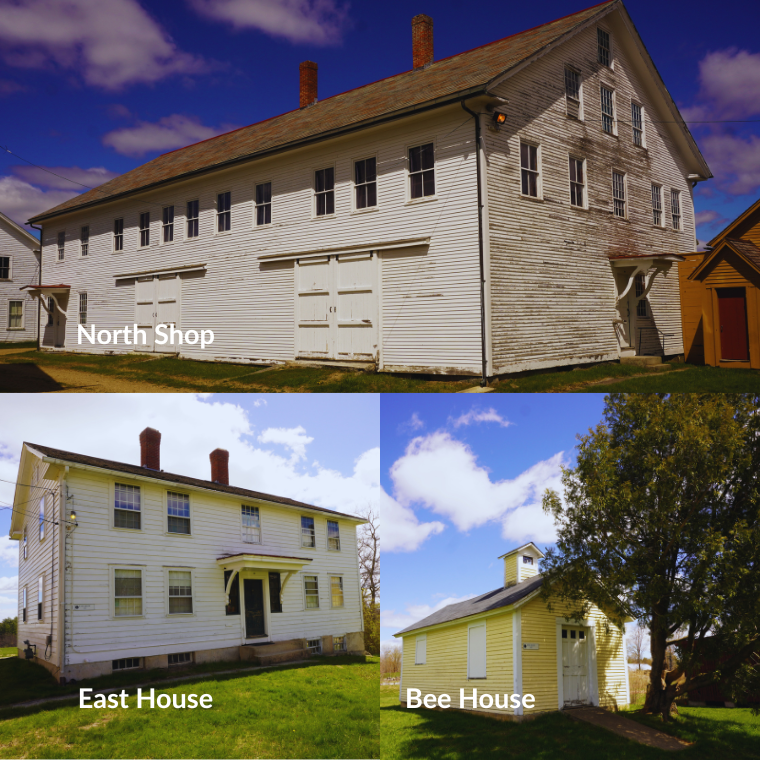
East House (1810): The building’s structure and foundation will be repaired before the roof is replaced, carpentry repairs are made, and the building is painted. Because this building is occupied, its windows will be weatherized, and it will receive new storm windows. The building’s systems (water, fire safety, etc.) will then be updated. Once construction is complete, a new exhibit relating to the raising and education of children at Canterbury Shaker Village will then be installed.
Bee House (1837): This building received a new roof in 2025, and its interior and exterior will be preserved this year. A new exhibition about Shaker agriculture will be installed. We plan to have an opening event in late August. Stay tuned!
North Shop (1841): We repaired the slate roof and hope to paint the building during this construction season, as well. The North Shop will be the site of our “Raise the Roof” barn dances in May and June, so come have fun and support our historic preservation efforts!
If you can’t come see our progress in person, please follow us on Facebook and Instagram, or sign up for our newsletter so you can be part of this wave in the ongoing ocean of historic preservation at Canterbury Shaker Village.
-Erin Hammerstedt, Executive Director, Canterbury Shaker Village
About Canterbury Shaker Village
Canterbury Shaker Village is a nonprofit-owned National Historic Landmark district featuring 25 restored Shaker buildings in their historic setting of 694 acres of forests, fields, gardens, and mill ponds. In addition to museum tours, exhibits, and programs, the preserved Shaker village provides a beautiful, relaxing, and inspiring environment for recreation, learning, reflection, and renewal of the human spirit.
Canterbury Shaker Village is a member of the NH Heritage Museum Trail, which connects the public with culturally rich heritage institutions in New Hampshire. For more information about The Trail, visit nhmuseumtrail.org.